
Reviewed by Grant McCreary on December 9th, 2006.
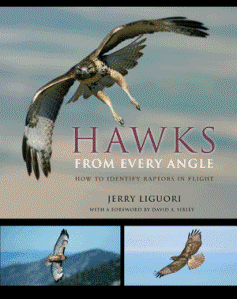

Date: September, 2005
Illustrations: photographs
Binding: softcover
Pages: 144
Size: 7 1/2″ x 9 1/2″
MSRP: $19.95
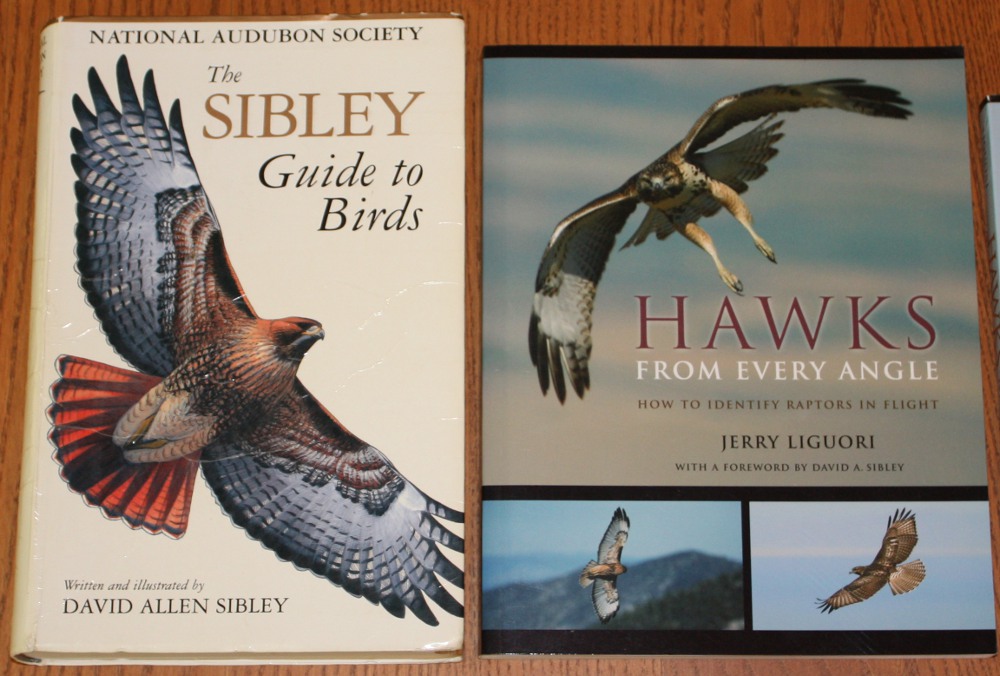
In 1988 the trio of Pete Dunne, David Sibley, and Clay Sutton wrote the landmark Hawks in Flight

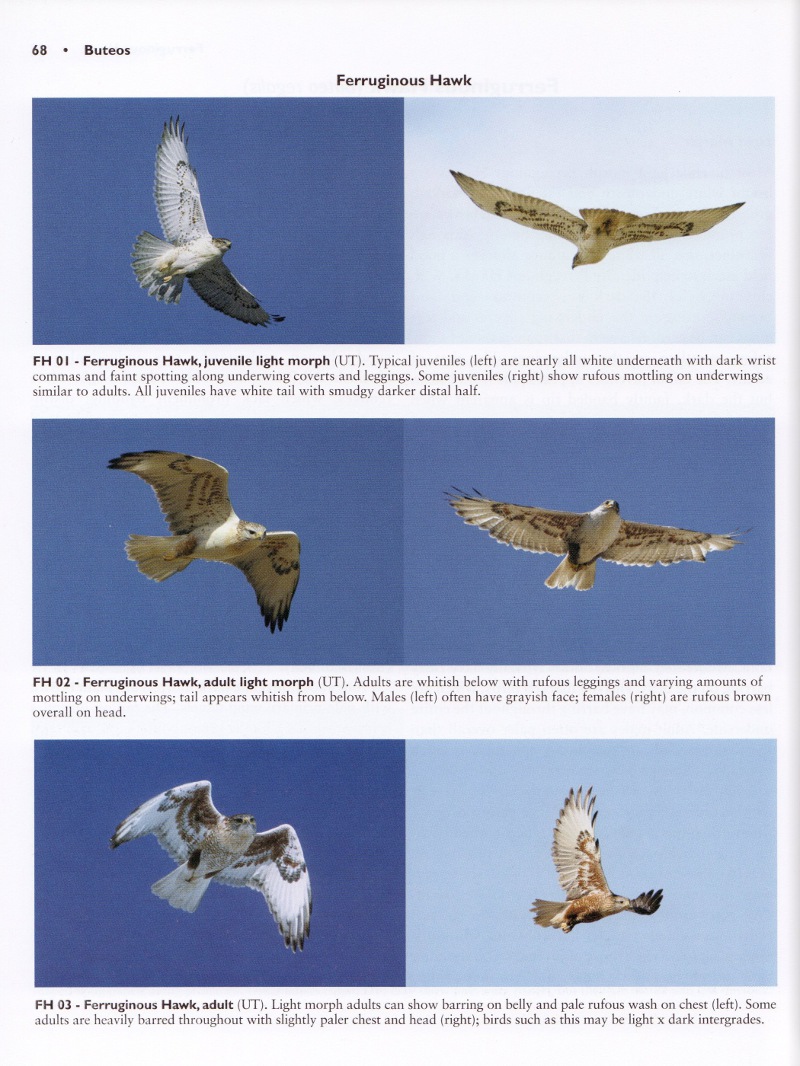 This photograph-based identification guide indeed shows hawks in flight from just about every angle. Each large page contains up to six average-sized (for identification guides) pictures. At the end of many accounts is a series of “pitfall” photos showing the hawk and similar species in the same pose. In many cases, the images have been edited to display the two birds side-by-side and the same size so as to emphasize plumage differences. The pitfall sections were crafted very well and I have found them to be extremely helpful.
Accompanying the photos is a substantial amount of text. The photos are captioned, of course, and the plumage of each species is described in detail. There is also an overview of each grouping (described below) that includes:
- Overview – general information and range; size and structure
- Migration
- Pitfalls
- Flight Style – including wing beat
- Soaring
- Head-on
- Gliding Overhead
- Wing-on/Going Away
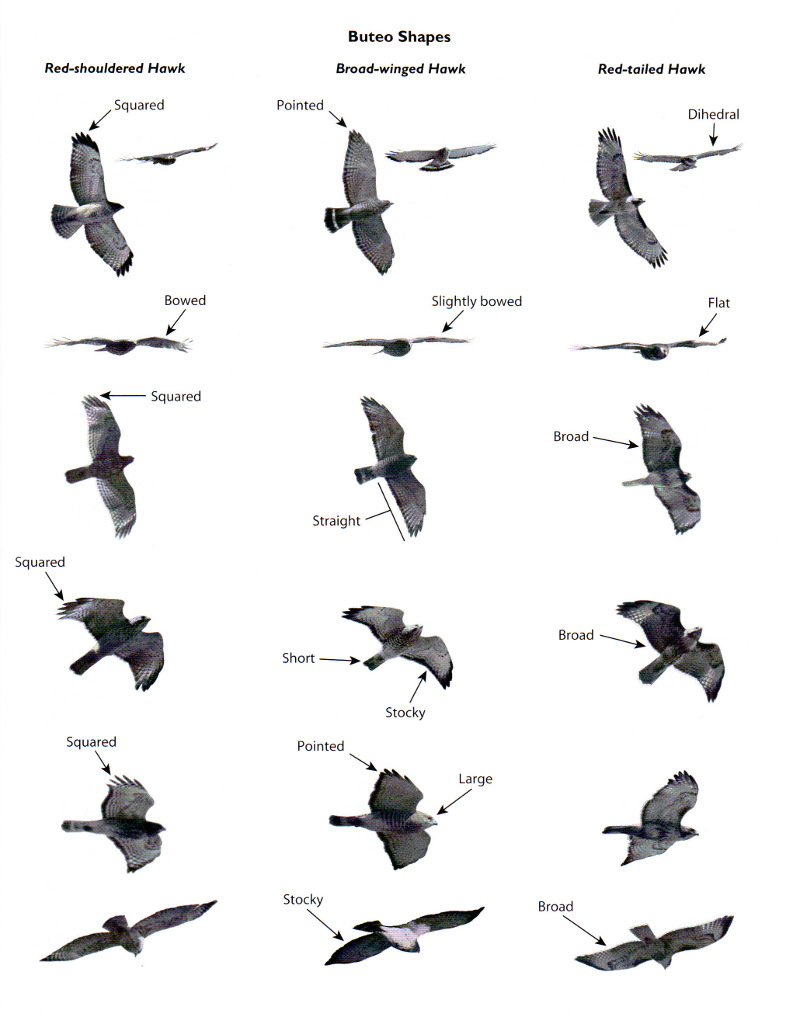
Surprisingly, perhaps my favorite photographs in Hawks from Every Angle aren’t even in color! At the end of each section is a comparison plate showing each of the species in similar positions. In order to emphasize shape these photos are black-and-white and sized so that the species look the same. This is a great feature and should prove very valuable.
 The introduction describes the book and how to use it; gives basic information on molt, optics, and hawk migration sites; and includes a glossary, labeled photos for bird topography, and photos of raptors in various flight positions.
Liguori, like the authors of Hawks in Flight before him, has chosen to focus on the raptors most likely to be seen at migration sites throughout North America. Thus, non-migratory and local species – such as Snail Kite, White-tailed Kite, and Gray Hawk, among others – are not included. Nineteen hawks are covered in full, one partially, and two more included as a “similar species”. These 22 birds are grouped as follows:
- Accipiters: Sharp-shinned; Cooper’s; Northern Goshawk
- Northern Harrier
- Buteos: Red-shouldered; Broad-winged; Swainson’s; Red-tailed; Ferruginous; Rough-legged
- Falcons: American Kestrel; Merlin; Peregrine; Prairie; Gyrflacon (less coverage); Mississippi Kite (as a “similar species”)
- Vultures (Black, Turkey, Zone-tailed Hawk (as a “similar species”)); Osprey; Bald Eagle; Golden Eagle
Recommendation
Hawks from Every Angle
Liguori’s followup – Hawks at a Distance: Identification of Migrant Raptors – is a great complement to Hawks from Every Angle. Together, they are the complete guide to the identification of migrant raptors in flight.
Disclosure: I get a small commission for purchases made through links in this post.

 Loading ...
I think this is a wonderful raptor book. As you recommended I have both the Wheeler guide (Western part) and this book. I love them both and I will study them in detail before my next trip to North America 2009.